Mobile Money and Financial Inclusion: What ICT4D Research Has Learned
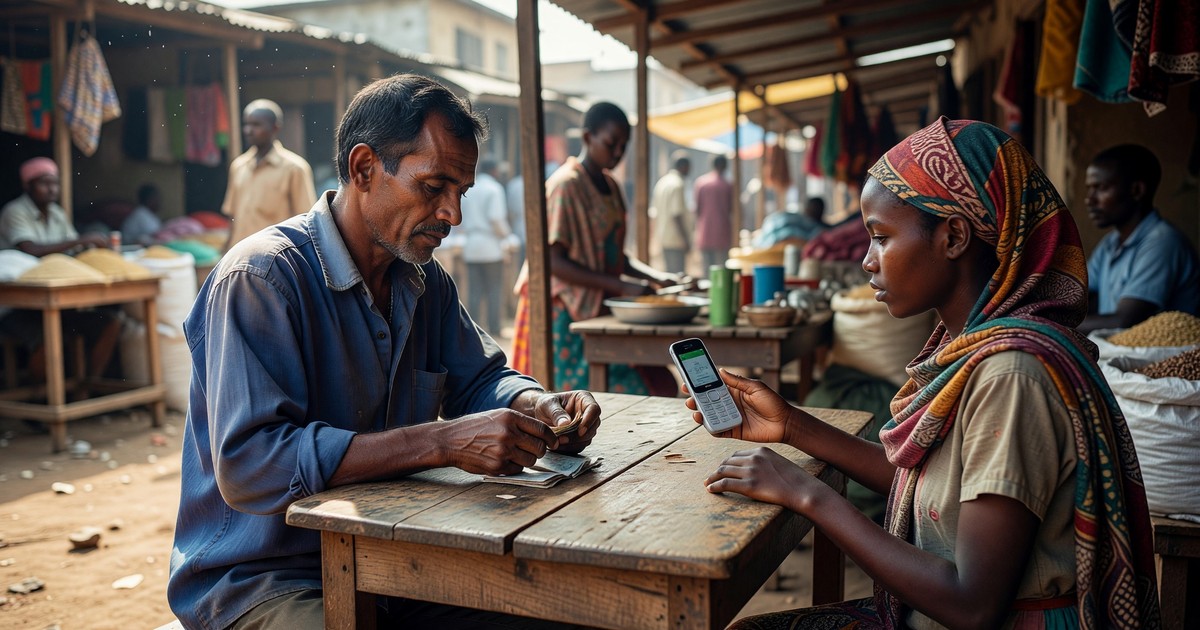
Mobile money — the use of mobile phones to transfer funds, make payments, and store value — has generated more ICT4D research than almost any other technology application in development contexts. The reason is straightforward: M-Pesa, launched by Safaricom in Kenya in 2007, produced results dramatic enough to compel serious academic attention. Within three years of launch, it had 14 million users and was processing more transactions than the entire formal banking system. Within five years, researchers had published evidence linking its adoption to measurable household welfare improvements.
This article reviews what the accumulated ICT4D literature on mobile money has established, where uncertainty remains, and what the lessons mean for digital financial inclusion efforts in other contexts.
The M-Pesa Baseline
The most influential single study in mobile money research is Suri and Jack’s 2016 paper in Science: “The long-run poverty and gender impacts of mobile money.” Using variation in the timing of M-Pesa agent network rollout across Kenya, the authors estimated that access to M-Pesa led to a 2 percent increase in per-capita consumption for households overall — and a 22 percent increase for households headed by women in female-headed households who were initially at the bottom of the consumption distribution.
The mechanisms identified were: smoothing of consumption in response to income shocks (mobile money made it easier to send and receive funds from family members in response to emergencies), savings behavior (mobile money provided a safe savings mechanism for women who might otherwise have difficulty accessing formal savings), and economic diversification (access to reliable payment mechanisms facilitated entry into small-scale trade and services).
These findings were significant because they connected mobile money to poverty reduction through plausible causal mechanisms — not just correlation — using a credible identification strategy. They also drew attention to gender as a key dimension of mobile money’s development impact.
What the Broader Evidence Shows
Since 2007, research on mobile money has expanded to cover contexts well beyond Kenya. The broader evidence base — synthesized in reviews by the World Bank, GSMA Intelligence, and academic survey papers — shows:
Financial inclusion: Mobile money has demonstrably expanded access to financial services in contexts where formal banking penetration is low. In sub-Saharan Africa, mobile money account ownership now exceeds formal bank account ownership in many countries. The World Bank’s Global Findex database tracks these trends across time.
Remittances: Mobile money has significantly reduced the cost and friction of domestic remittances — money sent by urban workers to rural family members. Evidence from Kenya, Tanzania, Uganda, Ghana, and elsewhere documents faster, cheaper, and more reliable domestic transfer relative to alternatives (bus transport of cash, money transfer agents).
Consumption smoothing: Multiple studies confirm that mobile money users are better able to smooth consumption through income shocks — illness, crop failure, job loss — by accessing informal networks of family transfers more easily. This is particularly significant in contexts where formal insurance is absent.
Savings and investment: Evidence on savings effects is more mixed. Some studies find that mobile money increases savings rates; others find that it changes the form of savings (from physical assets like livestock to liquid digital balances) without necessarily increasing total savings.
Business and entrepreneurship: Mobile payment facilitation has been linked to small business growth in several African countries — particularly in reducing the transaction costs of small-scale trade.
Gender and Mobile Money
The gender dimension of mobile money research has received growing attention. The GSMA’s Connected Women program and several academic researchers have documented:
- Women in many low-income countries are significantly less likely than men to own a mobile money account, even when controlling for phone ownership
- Women who do have accounts often have lower transaction volumes and use a narrower set of services
- Despite lower adoption, the per-beneficiary welfare gains from mobile money access appear larger for women than for men in several studies — particularly for women at the bottom of the income distribution
The barriers to women’s mobile money adoption include: lower phone ownership rates, social norms around women using financial services independently, lower digital literacy, and lower income levels that affect the perceived value of financial services.
Efforts to close the gender gap have included programs from mobile operators, NGOs, and government agencies targeting women specifically — with variable results. The evidence suggests that social and structural barriers require more than product design changes to address.
Replication Beyond Kenya
One of the most important questions in mobile money research is whether Kenya’s experience replicates elsewhere. The evidence suggests: sometimes, under specific conditions, but not automatically.
Countries where mobile money has scaled significantly include: Tanzania, Uganda, Ghana, Côte d’Ivoire, Zimbabwe, Bangladesh, and Pakistan. In each case, a combination of factors contributed:
- Regulatory environment: Markets where mobile money was allowed to operate at national scale before formal banking regulations were fully applied (a de facto permission to launch and learn) showed faster growth
- Banking exclusion: Markets where formal banking penetration was very low provided a large unserved population for whom mobile money was a meaningful improvement
- Distribution infrastructure: The availability of agent networks for cash-in/cash-out (converting between physical cash and digital value) was critical to adoption
- Trust in the operator: Markets where the dominant mobile operator had high consumer trust showed faster adoption
Countries where mobile money has not scaled include several where banks lobbied successfully for restrictive regulations, or where infrastructure and trust conditions were not favorable.
Critiques and Limitations
The mobile money literature has not been without critique:
Selection bias in evaluations: Early evaluations of mobile money often suffered from selection bias — they studied places where mobile money already existed, or users who had already adopted, rather than using methods that could credibly estimate causal effects.
Heterogeneity of effects: Effects have been found to vary substantially by context, by population subgroup, and by type of use. Aggregated findings can obscure this heterogeneity.
Long-term sustainability: The mobile money business model has proved more difficult to sustain than its scale suggests. Several operators have struggled with agent network economics — the cost of maintaining the cash-in/cash-out infrastructure that makes mobile money accessible.
Beyond banking the unbanked: Critics have noted that mobile money, while providing access to payment and transfer services, does not provide the full suite of financial services — particularly credit and insurance — that are most transformative for low-income households. Mobile credit products (M-Shwari and successors) have begun to address this, but with concerns about over-indebtedness.
Implications for ICT4D Design
The mobile money evidence base offers several lessons for ICT4D practitioners more broadly:
Context is primary. The conditions that enabled M-Pesa in Kenya — regulatory tolerance, high banking exclusion, a trusted operator — are not automatically present elsewhere. Understanding context before importing a model is essential.
Agents and intermediaries matter. The cash-in/cash-out agent network was as important as the technology itself. Digital systems that require physical intermediary infrastructure need those networks to be sustainable.
Gender is not an afterthought. Mobile money’s most significant welfare effects were found for women at the bottom of the income distribution. Designing for gender inclusion requires explicit attention to barriers, not just availability of the service.
Adoption ≠ impact. The fact that hundreds of millions of people use mobile money does not mean all of them benefit equally or substantially. Understanding which users benefit and how is as important as measuring scale.
Frequently Asked Questions
What is the difference between mobile banking and mobile money? Mobile banking refers to accessing traditional bank accounts through a mobile phone (through apps or USSD codes). Mobile money refers to a distinct account held by a mobile operator — not a bank — which can be used for transfers, payments, and value storage. Mobile money is more relevant to financial inclusion in contexts with low formal banking penetration.
Has mobile money reached the poorest? Research shows that mobile money disproportionately benefited lower-income households in Kenya in absolute terms — but it reached them through informal networks (receiving transfers from higher-income contacts) rather than through direct adoption. The poorest households are often “last mile” adopters or indirect beneficiaries. Full inclusion of the extreme poor remains a challenge.
Is mobile money now being threatened by fintech platforms? Yes. The growth of digital finance platforms — from super-apps to embedded finance to crypto — is creating both opportunities and disruption for traditional mobile money operators. Research is beginning to examine how these new actors interact with the populations ICT4D has traditionally focused on.
What happened to M-Pesa in other countries where it was launched? Safaricom/Vodafone launched M-Pesa in Tanzania, South Africa, India, Romania, and several other countries. Results were highly variable — successful in Tanzania, less so in South Africa (where banking penetration was higher) and India (where regulatory constraints were different). The Kenya model did not transfer unchanged.
Where can I find the primary research on mobile money and development? Key publications include the World Bank’s Global Findex database reports, the GSMA Intelligence research portal, and academic papers in journals including the American Economic Review (Suri and Jack 2016), the Journal of Development Economics, and the Journal of Economic Perspectives.
Further Reading from Authoritative Sources
- World Bank Global Findex Database — The World Bank’s primary data resource on financial inclusion, tracking mobile money and formal account ownership across 140+ countries.
- GSMA State of Mobile Internet Connectivity — The GSMA’s annual report on mobile connectivity and digital inclusion in low- and middle-income countries, including mobile money coverage data.
For a detailed case study of M-Pesa’s origins and documented impact, see our article on M-Pesa in Kenya. For the methodological approaches used to study mobile money programs, see our case study methodology guide.