IGF 2026 Nairobi: Governing the Internet in the Age of Intelligence
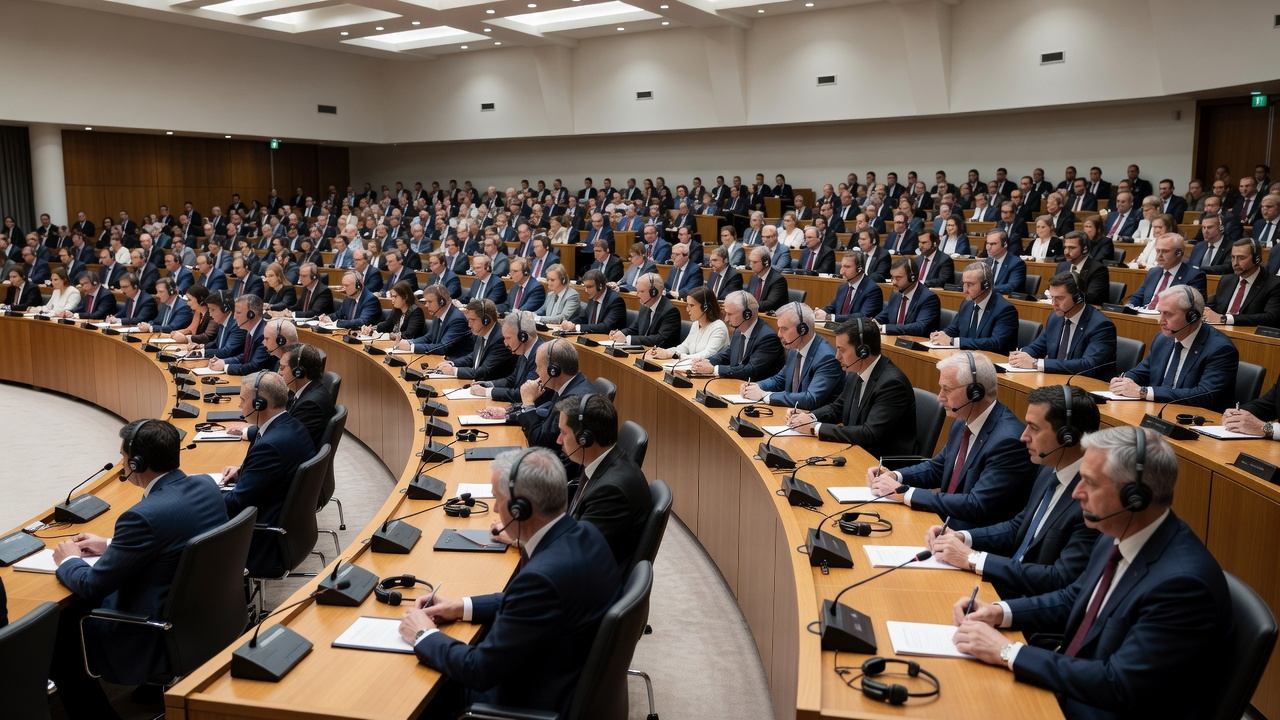
The 21st Internet Governance Forum meets in Nairobi from 14 to 18 December 2026, under the overarching theme “Governing the Internet in the Age of Intelligence: Our Shared Responsibility.” It runs in hybrid format, with participation onsite in Kenya and online.
The theme is the visible headline. The structural story is the more consequential one: this is the first global IGF gathering since the UN General Assembly decided to establish the IGF as a permanent UN forum, ending two decades in which the forum operated under time-limited mandates requiring periodic renewal.
For researchers who study internet governance institutions, that shift changes what the IGF is, and it deserves more attention than the annual theme.
Why permanence is the substantive change
The IGF was created out of the World Summit on the Information Society with a five-year mandate, subsequently extended, and its continued existence has been a live question at every renewal point. That impermanence shaped the institution in ways that are well documented in the governance literature.
A forum that must justify its existence periodically behaves differently from one that does not. Renewal cycles absorbed institutional energy, encouraged output that demonstrated relevance to the states voting on renewal, and made the forum cautious about producing anything that looked like a binding outcome — since a mandate to convene, not to decide, was the basis on which it survived.
Several research questions follow directly from removing that constraint:
Does the non-binding character persist? The IGF’s defining feature has been that it convenes without negotiating. That was partly design and partly a function of contested legitimacy. With a permanent mandate, whether the forum develops stronger outputs — and whether states permit it to — becomes an empirical question with a natural before-and-after.
Does participation composition change? Multistakeholder participation at the IGF has been persistently uneven, with well-documented asymmetries in who can afford to attend, who has the technical staff to engage across parallel sessions, and whose positions carry into other venues. Permanence may stabilise the funding and planning horizon in ways that alter this, or may not.
Does the IGF’s relationship to binding venues shift? The substantive decisions that shape the internet are made elsewhere — in the ITU, in trade agreements, in regional regulatory blocs, and increasingly in the domestic legislation of large markets whose extraterritorial effects are global. Whether a permanent IGF gains influence over those venues, or is stabilised precisely because it does not threaten them, is the central question about its significance.
That last framing is worth stating plainly rather than diplomatically: an institution can be made permanent because it matters, or because it is safely peripheral. Distinguishing those readings requires evidence about influence, not about status, and the coming years provide the natural test.
The theme, and what it presumes
“Governing the Internet in the Age of Intelligence” directs the programme toward the relationship between artificial intelligence, other forms of intelligence, the future of the internet, and their governance — with sessions expected across policy, technical, economic, and societal perspectives.
The framing embeds an assumption worth examining rather than accepting: that AI governance is continuous with internet governance and belongs in the same institutional home. There is a reasonable case either way. AI systems run on internet infrastructure, are trained on internet-derived data, and raise overlapping questions about jurisdiction, standards, and concentration. But AI governance also raises questions — compute access, model release policy, training-data provenance, labour conditions in data annotation — that map poorly onto the protocol-and-domain-name concerns around which internet governance institutions were built.
Watching whether the Nairobi programme substantively integrates these or simply appends AI sessions to an existing structure would be a legitimate small research output in itself, and one that a hybrid-format meeting with a published programme makes tractable.
Why Nairobi matters as a venue
Host location is not merely logistical for a forum whose legitimacy rests on inclusive participation.
Kenya is a substantive site for these discussions rather than a symbolic one. It has one of the most developed digital economies in sub-Saharan Africa, a mobile money sector that is a standard reference case in the development literature, a significant technology sector, and an active civil society engaged in digital rights litigation and advocacy. It also has direct experience of the governance questions on the agenda — data protection implementation, platform regulation, digital identity, and internet disruption during politically sensitive periods.
Hosting in Nairobi also lowers the participation cost for African stakeholders, which historically shifts the composition of who is in the room. Whether that translates into agenda influence rather than attendance is, again, measurable — and the December meeting sits just weeks after the African IGF in Accra, giving continental positions a recent and documented articulation to carry forward.
For researchers planning around it
Three practical notes.
The hybrid format means the session record is largely public and remotely accessible, which makes the IGF an unusually tractable object of study for researchers without travel funding — transcripts, session proposals, and outputs are published rather than reconstructed from attendance.
The call for session proposals is the earliest signal of what the community intends to discuss, and the gap between proposals submitted and sessions selected is itself informative about programme-setting priorities.
And the permanence decision creates a genuine natural experiment. Baseline documentation of the IGF’s outputs, participation profile, and downstream citation before the permanent mandate takes full effect is work that becomes considerably harder to do retrospectively. That is a reason to start now rather than after Nairobi.