The Digital Divide in the Global South: What the Data Actually Shows
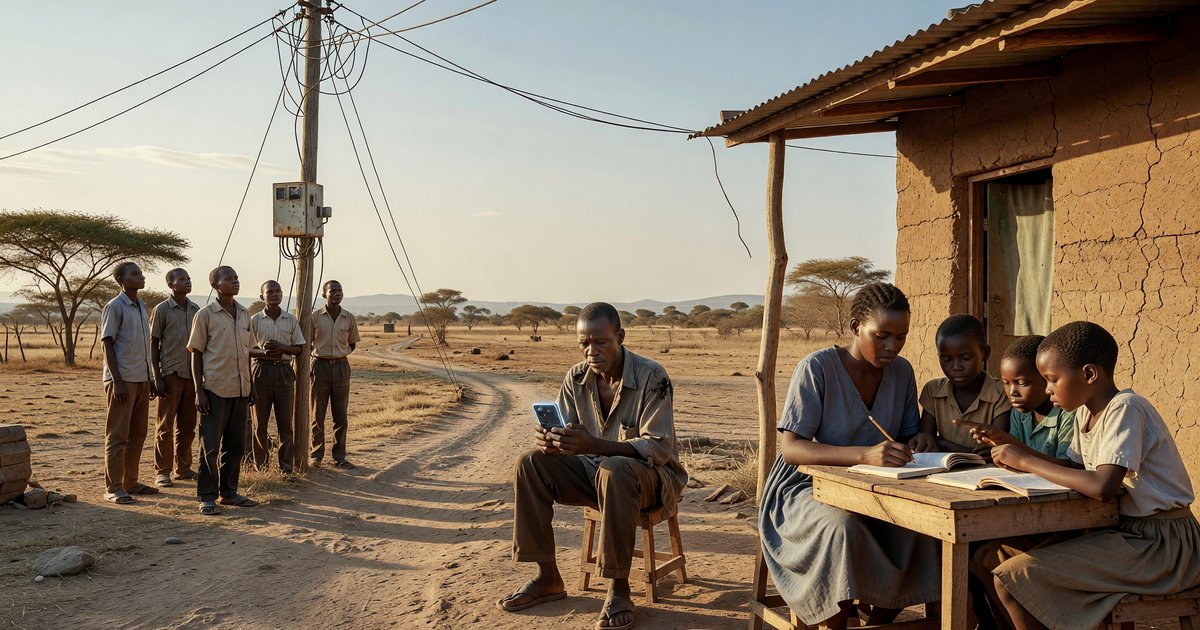
The phrase “digital divide” has been part of the policy vocabulary since the late 1990s, when it was used primarily to describe the gap between those with home computers and internet access and those without. In the context of international development, the term has since expanded to describe a more complex, multidimensional set of inequalities in digital access, capability, and outcomes — inequalities that matter deeply for the life chances of hundreds of millions of people.
This article examines what the current data shows about digital inequality in low- and middle-income countries, how the divide has evolved over the past two decades, and what research tells us about the difference between access and meaningful use.
The Connectivity Picture: Progress and Persistent Gaps
The headline story of the past 20 years is dramatic expansion of connectivity in the Global South. According to the ITU (International Telecommunication Union), mobile broadband coverage now reaches over 85 percent of the world’s population. In sub-Saharan Africa, mobile phone penetration has grown from under 10 percent in 2002 to over 50 percent today, a pace of adoption that outstripped many predictions.
But “coverage” and “use” are not the same thing. The ITU’s Global Connectivity Report consistently documents that:
- 4.3 billion people globally remain unconnected to the internet — nearly all of them in low- and middle-income countries
- The gap between coverage and use is largest in sub-Saharan Africa and South Asia, where roughly half the population lives within range of a mobile network but does not use mobile internet
- Cost is the most frequently cited barrier — in many low-income countries, one gigabyte of mobile data costs more than 10 percent of average monthly income
The GSMA’s Connected Women report documents an additional dimension: across low- and middle-income countries, women are 15–25 percent less likely to own a mobile phone than men, and even less likely to use mobile internet — a gender digital divide that compounds existing inequalities.
Beyond Access: The Multilayered Divide
Researchers have criticized simple “access” framings of the digital divide since the early 2000s. The sociologist Jan van Dijk developed an influential framework identifying four interdependent dimensions of digital inequality:
- Motivational access — whether someone wants to use digital technology (influenced by literacy, relevance, and cultural factors)
- Physical access — possession of a device and connectivity
- Skills access — the digital literacy and capabilities to use technology effectively
- Usage access — whether the technology is actually used in ways that are beneficial
This framework makes clear that connecting people to the internet does not automatically produce digital inclusion. A person who has mobile coverage but cannot read the relevant language of available content, cannot afford data costs, or lacks the skills to use mobile applications has nominal access but not meaningful access.
The Language Divide
One underexamined dimension of the digital divide is language. The internet was built primarily in English, and while content in other major languages has expanded enormously, the gap remains stark.
Research by the Oxford Internet Institute and others documents that:
- English content accounts for around 60 percent of web content
- The top 10 languages of the internet account for over 80 percent of content
- Hundreds of languages spoken by millions of people in the Global South have effectively no online content
For communities where local language is not well represented online, the relevance value of internet access is fundamentally different. ICT4D research on localization — the development of content, interfaces, and services in local languages — has consistently found that local language content dramatically increases adoption and meaningful use.
Urban-Rural Divides
Even in countries with growing national connectivity statistics, urban-rural gaps remain large. Rural areas face compounding barriers:
- Infrastructure: Mobile networks and fixed broadband are less dense in rural areas; coverage at the edges of network ranges is often too weak for data applications
- Power: Rural electrification rates remain below 50 percent in many parts of sub-Saharan Africa, limiting device charging and powering local infrastructure
- Literacy: Rural populations often have lower formal education levels, with implications for digital literacy
- Relevance: Rural economies are often agricultural — and while agricultural information services are an active ICT4D application area, the generic internet is not well-optimized for rural livelihoods
Research on rural digital inclusion consistently finds that simply extending network coverage to rural areas is necessary but not sufficient; design for rural context, local language, and locally relevant applications is required to produce meaningful use.
These same rural infrastructure and power gaps are also the primary constraint on climate resilience: the cell towers, health facilities, and data systems already thinnest on the ground in rural areas are typically the first to go dark during floods, cyclones, and heat events — a vulnerability examined in our overview of climate-resilient ICT design.
Quality Matters: Speed, Reliability, and Affordability
Even among connected populations, connectivity quality varies enormously. In high-income countries, broadband speeds average over 100 Mbps. In many low-income countries, effective mobile speeds are under 5 Mbps — and intermittency (signal drops, congestion, power outages) makes even this an unreliable measure.
The difference between nominal and effective connectivity has significant implications for what services are usable. Video calls require sustained bandwidth that many mobile connections cannot support reliably. Web applications designed in high-income contexts often assume connectivity speeds and device capabilities that are not present in low-resource environments.
The ICT4D design principle of “offline-first” development — designing applications that store data locally and synchronize when connectivity is available — is a direct response to these quality realities.
What Research Says About the Returns to Connectivity
The central question for development policy is whether closing the digital divide produces development outcomes that justify the investment. The evidence is mixed and context-dependent.
Areas where the evidence is relatively strong:
- Mobile money adoption has been shown to expand financial inclusion and increase household consumption in Kenya and several other countries (Suri and Jack, 2016, is the landmark study)
- Mobile internet access is associated with higher wages and employment for workers who can take advantage of digital labor platforms
- Access to digital price information for agricultural commodities has been shown to reduce price dispersion and improve farmer bargaining power in some contexts
Areas where the evidence is weaker or more contested:
- Telecentre-based programs showed limited sustained impact in many evaluations — physical community computer centers had high costs and often low utilization
- ICT-in-education programs have produced disappointing results in many randomized evaluations, with tablet distribution programs showing little learning effect without accompanying pedagogical change
- E-government initiatives frequently fail to reach intended beneficiaries due to low literacy, lack of identification documents, or lack of trust in state systems
The UNDP and World Bank have both published assessments of the ICT4D evidence base that caution against simplistic claims about technology’s development effects, while noting meaningful opportunities in specific application areas.
Frequently Asked Questions
Is the digital divide closing? In terms of basic connectivity access, yes — mobile coverage has expanded dramatically. But the more meaningful dimensions of the divide (quality, affordability, digital literacy, relevant content and services) show more mixed progress. The gap between high-income and low-income countries in meaningful digital use has narrowed less than the gap in raw connectivity.
Why hasn’t the spread of smartphones closed the digital divide faster? Smartphones are necessary but not sufficient. The barriers that matter most — cost of data, digital literacy, relevance of available content — are not automatically addressed by device availability. Additionally, the secondhand smartphone market means many low-income users have older devices with limited capabilities.
Is the digital divide mainly a connectivity problem or a literacy problem? Both matter, and they interact. Extending connectivity to someone with very limited digital literacy may produce little benefit; developing digital literacy skills matters less if connectivity is too expensive to use regularly. The most effective interventions address both simultaneously.
How does the digital gender gap affect development outcomes? Research documents that the gender digital gap significantly reduces women’s economic participation, access to information, and political voice. The GSMA and UN Women have published research on the downstream effects of women’s mobile phone exclusion on household income and empowerment metrics.
What role do governments play in closing the digital divide? Government policy is central to universal service obligations on telecoms operators, spectrum allocation, public school connectivity, digital literacy programs, and regulatory frameworks that affect data pricing. The ITU and UNDP both maintain frameworks for national digital development strategies.
Further Reading from Authoritative Sources
- ITU Measuring Digital Development — The International Telecommunication Union’s flagship statistics series on global connectivity, including the ICT Development Index that tracks digital access across nations.
- UNDP Digital Inclusion Resources — The United Nations Development Programme’s resources on digital inclusion policy, covering approaches to bridging access and skills gaps in developing countries.