Africa Internet Governance Forum 2026: Accra and the Continental Policy Track
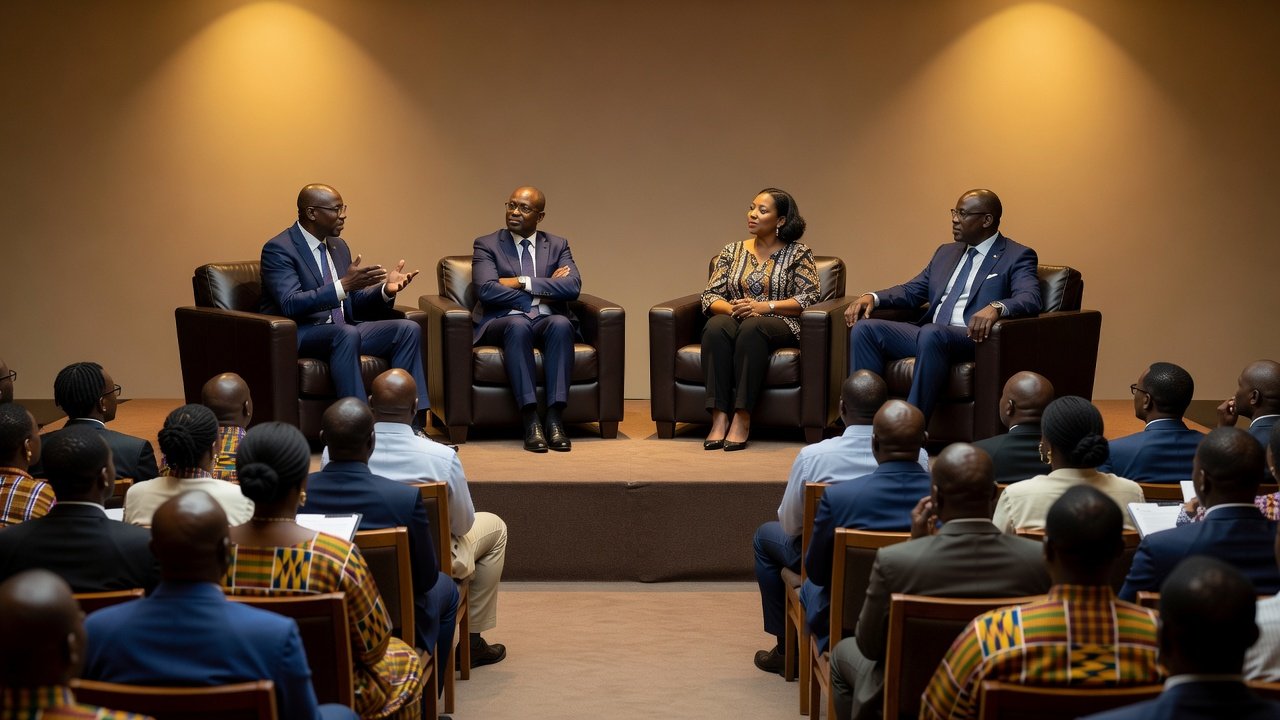
The 15th African Internet Governance Forum meets in Accra, Ghana from 2 to 5 November 2026, under the theme “Advancing Africa’s Digital Future Through Innovation, Inclusion, and Trust.” It runs in hybrid format, and is preceded by the African School on Internet Governance from 28 October to 1 November.
The agenda spans artificial intelligence, cybersecurity, digital trust, digital inclusion, connectivity, data governance, digital identity, online safety, and emerging technologies — with participation drawn from governments, parliamentarians, the private sector, civil society, the technical community, academia, youth, and development partners.
The timing is the detail worth noticing. AfIGF in Accra sits roughly six weeks before the global IGF convenes in Nairobi in December. That sequencing is deliberate in the IGF ecosystem’s design, and it is the part that research on internet governance most consistently under-examines.
The regional tier is understudied
Scholarship on internet governance concentrates heavily on the global tier — the IGF itself, ICANN, the ITU, and the WSIS process. National-level work exists, usually as country case studies of specific policies. The regional and sub-regional tier in between receives comparatively little sustained attention, despite being where a great deal of the actual position-formation happens.
For African internet governance specifically, that gap is consequential. The continental policy track is not a single venue but a set of interacting ones: the African Union’s digital transformation strategy and its Data Policy Framework, the Malabo Convention on cyber security and personal data protection, regional economic community instruments, and the AfIGF alongside its sub-regional counterparts in West, East, Southern, Central, and North Africa.
The questions that follow are straightforwardly empirical and largely unanswered:
Does the regional forum shape what states carry into global venues? The national-to-regional-to-global pipeline is an explicit design assumption of the IGF model. Whether it functions as designed — whether positions articulated at AfIGF are traceable in national interventions at the global IGF — is testable against published session records and statements, and rarely tested.
Where does convergence actually come from? African data protection law has converged substantially over the past decade, but the causal weight of the Malabo Convention, of the AU Data Policy Framework, of the extraterritorial pull of the GDPR, and of the model-law work done by regional bodies is contested. Attributing convergence to the instrument that most visibly resembles the outcome is a recurring inferential error in this literature.
Who participates, and with what preparation? AfriSIG running immediately before the forum is a capacity-building intervention with an identifiable cohort, a curriculum, and alumni who continue to participate in governance processes. It is an unusually well-defined object for studying whether internet governance capacity building produces durable participation — and the fact that it has run for years means a retrospective cohort study is feasible now.
Why the theme’s three terms are worth taking seriously
“Innovation, Inclusion, and Trust” reads like standard forum language, but the three terms name genuine and partly competing policy positions in the current African context.
Innovation aligns with the growth-and-investment framing that dominates continental digital strategy — startup ecosystems, digital trade under the AfCFTA, and the argument that regulatory restraint attracts investment.
Inclusion names the distributional problem: connectivity, affordability, and gendered access gaps that persist despite two decades of expansion, and which the continent’s own data consistently documents.
Trust is where the tension sits. It covers data protection, cybersecurity, and online safety — and it also, less explicitly, covers the governance questions African civil society has raised most forcefully: internet shutdowns during elections and protests, surveillance capability procurement, digital identity systems deployed as a condition of accessing services, and platform content moderation that operates poorly in African languages and contexts.
Whether “trust” in the Accra programme means citizens trusting digital systems or states trusting that digital systems are controllable is a real distinction, and it is the kind of framing question that programme analysis can address directly.
The AI overlay
Both AfIGF Accra and the global IGF in Nairobi carry substantial AI content this year, and the World Bank’s 2026 World Development Report on AI in developing countries lands into that discussion having been published in August.
The continental position on AI governance is still forming, which makes this an unusually good moment to document it. The specific tension to watch: the development-opportunity framing that dominates institutional messaging sits alongside a set of concerns — compute and infrastructure dependency, data extraction, the conditions of data annotation labour, and the poor performance of major models in most African languages — that are articulated more sharply by researchers and civil society than by states.
How those two framings are reconciled in a forum programme, or left unreconciled, is informative about where continental AI policy is heading.
Practical notes for researchers
The session proposal call and the published programme are the primary sources for what the community intends to discuss, and the difference between the two is a useful signal about agenda-setting.
The Accra-to-Nairobi sequence within a single year offers a rare tractable design: a regional forum and a global forum, six weeks apart, both hybrid and both producing public records. Tracing specific issues, phrasings, and named participants from one to the other is a bounded piece of work that would speak directly to whether the multistakeholder pipeline functions as claimed.
And the hybrid format matters for access. A researcher without travel funding can observe both meetings, which is precisely the sort of participation asymmetry that internet governance research has spent years documenting in others.