IDIA Postgraduate Workshops: Building ICT4D Research Capacity in Southern Africa
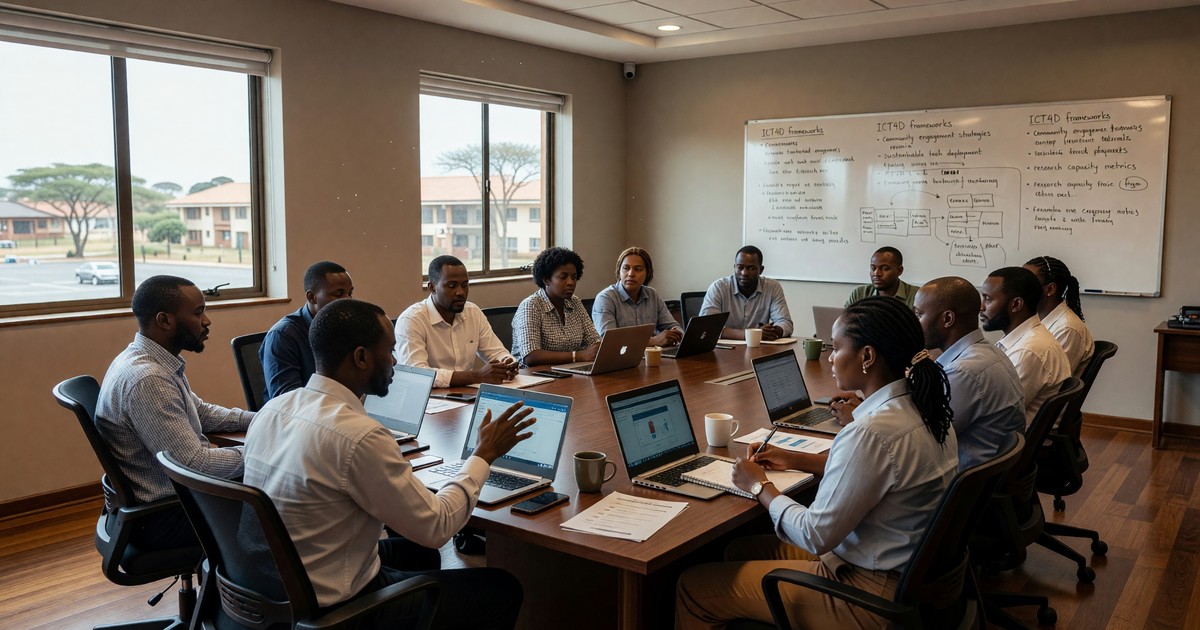
Every IDIA conference from 2007 to 2015 included a postgraduate workshop — a structured mentoring and feedback session for PhD and master’s students presenting work in progress. This was not an afterthought or a junior track bolted onto a senior conference. The postgraduate workshop was central to IDIA’s mission: to build ICT4D research capacity among African scholars, so that the field’s knowledge base would reflect the perspectives and expertise of researchers embedded in the communities they studied.
This overview documents the IDIA postgraduate workshop model, its distinctive features, and the research careers it contributed to building.
Why Postgraduate Workshops Were Central to IDIA
The founding IDIA organizing community recognized a structural problem in ICT4D research: most significant research on ICT in African development contexts was being conducted by researchers based in European, North American, or Australian universities, studying African communities from a distance. African university researchers — who had the deepest contextual knowledge and the longest-term stake in the research — were underrepresented in the literature.
The reasons were not mysterious: access to research funding, academic publishing infrastructure, conference travel resources, and established research networks all favored researchers in well-resourced Northern universities. African postgraduate students and early-career researchers faced a steep climb into the international ICT4D research community.
IDIA’s response was to build that pathway deliberately. The postgraduate workshop served as a structured entry point: a venue where African students could present emerging work to senior researchers, receive mentored feedback, build professional networks, and accelerate their development as independent scholars.
The Workshop Format
IDIA postgraduate workshops were typically held the day before or on the first day of the main conference, creating an intensive day-long event before the main program.
Structure of a typical workshop:
Morning: Research design and methodology sessions Senior researchers would present on research methods appropriate to ICT4D — case study design, action research, interpretive methods, mixed methods — followed by discussion and Q&A. These sessions were pedagogically oriented, giving students conceptual frameworks they could apply to their own work.
Afternoon: Student presentations and feedback Students would present their research — typically at the proposal or early data collection stage — in 15–20 minute slots. Each presentation received structured feedback from a senior researcher mentor assigned in advance, followed by open discussion from the workshop group.
The feedback model was deliberately constructive rather than evaluative — the goal was not to judge whether the research was good enough, but to help students make it better. Mentors were experienced IDIA conference presenters and journal authors who had navigated the same research process the students were in.
Closing: Networking and next steps The workshop day typically concluded with informal networking — students meeting senior researchers, connecting with peers from other institutions, and identifying potential collaborators or supervisors.
Workshop Participation Over the IDIA Series
The workshop consistently attracted 15–30 student participants from across southern Africa and internationally. Participants came from:
- South African universities: University of the Western Cape, University of Cape Town, University of Pretoria, University of South Africa (UNISA), Nelson Mandela University, Wits
- Other southern African institutions: National University of Lesotho, Namibia University of Science and Technology, University of Zimbabwe, University of Botswana
- East African institutions: Makerere University (Uganda), University of Nairobi, University of Dar es Salaam
- International students: Researchers from European and North American universities working on African ICT4D topics
The international mix was intentional: the workshop benefited from the combination of locally embedded African researchers (bringing contextual knowledge) and internationally placed researchers (bringing exposure to broader literature and publishing norms).
Research Themes in IDIA Postgraduate Work
The topics presented in postgraduate workshops across the IDIA series tracked the field’s evolving agenda:
Early years (2007–2009): Telecentre programs dominated. Students were conducting field evaluations of specific community computing centers — studying usage patterns, sustainability factors, and community reception.
Middle years (2010–2012): Topics diversified as mobile phone adoption became a major research area. Students were studying mobile phone use in rural communities, mobile health applications, and e-government implementation.
Later years (2013–2015): More theoretically sophisticated work. Students engaged with critical ICT4D perspectives — feminist approaches, postcolonial critique, capabilities analysis — alongside empirical research. Methodological sophistication increased, with more students using action research and mixed methods designs.
The Mentoring Relationships
One of the workshop’s less visible but significant contributions was the mentoring relationships it created. Senior researchers who participated repeatedly as workshop mentors developed ongoing relationships with students they had mentored — relationships that sometimes continued into supervision (informal or formal), co-authorship, and career support after the conference.
Several researchers who are now prominent in the ICT4D field had early work shaped by feedback at IDIA postgraduate workshops. The workshop was not the only factor in their development, but it provided structured access to experienced mentors at a critical stage — when research design decisions are being made and initial writing is taking shape.
This mentoring function is genuinely difficult to replicate through other mechanisms. Reading published literature, taking courses, and working with a local supervisor are all important but do not provide what a workshop provides: direct, personalized feedback on your specific work from researchers who have done similar work in similar contexts and have navigated the publication process the student is trying to enter.
Legacy: What the Workshops Built
By the end of the IDIA series in 2015, the postgraduate workshops had engaged roughly 150–200 students across eight years. The outcomes are difficult to measure precisely, but the qualitative record suggests:
Published researchers: A meaningful fraction of workshop participants have gone on to publish in peer-reviewed ICT4D journals and conference proceedings. The IDIA mentoring network provided a pathway into academic publishing that many participants would not have had otherwise.
Academic positions: Several IDIA postgraduate workshop alumni are now faculty members at African universities — teaching, supervising students of their own, and conducting ICT4D research. The workshops contributed to building a generation of African ICT4D scholars.
Practitioner influence: Not all postgraduate researchers become academics. Workshop alumni have also moved into development organizations, government roles, and technology companies — carrying the research perspective into practice. This influence is harder to trace but arguably as valuable as academic career outcomes.
Network building: The IDIA community of shared IDIA participation forms a network of researchers who know each other, cite each other’s work, and continue to collaborate. This network is an ongoing resource for the ICT4D field in southern Africa.
Frequently Asked Questions
Are IDIA postgraduate workshop papers published? The IDIA proceedings included postgraduate workshop papers in some years and excluded them in others, depending on the specific conference’s organization. Some workshop papers were subsequently submitted to and published in the main proceedings after revision; others were submitted to journals.
Could students who hadn’t yet done fieldwork attend the workshops? Yes — students at the proposal stage (pre-fieldwork) benefited particularly from feedback on research design. Presenting a design before data collection allows the most consequential improvements.
Were IDIA workshops only for PhD students? No — master’s students presented in many workshops. The workshop was explicitly positioned as a postgraduate (both master’s and doctoral) development event, not exclusively doctoral.
What was the application process for workshop participation? Students typically submitted a short abstract or extended abstract describing their research, reviewed by the workshop organizing committee. Acceptance was generally not highly competitive — the goal was to support as many developing researchers as the workshop format could accommodate with quality mentoring.
Did IDIA workshops have any long-term impact on the ICT4D field’s geographic representation? Partially. African researchers are better represented in ICT4D publications today than in 2007, and IDIA workshops contributed to that shift. But the structural factors that favor researchers in well-resourced Northern institutions remain significant, and the shift is incomplete. Efforts to build African research capacity in ICT4D continue through IDIA’s successor communities and through other programs.
Further Reading from Authoritative Sources
- UNDP Human Development and Research Capacity — UNDP resources on human development include coverage of research capacity building in low- and middle-income countries, the broader context for programs like IDIA’s workshop series.
- UNESCO Research Capacity Building — Wikipedia’s overview of capacity building in development contexts, providing framework for understanding what research capacity programs like IDIA’s workshops are trying to accomplish.